
And this isn't Oprah's Book Club. However, I thought I would share my current reading list. The following is a sort of rough reading schedule. Rarely is this my actual schedule during the course of a day, but over a period of a week or so, I normally get around to reading each of these resources at least a couple of times to stay up-to-date.
My morning at the office normally starts between 7:30 and 8, and comes with a big cup of coffee in my favorite hand-thrown Trotter mug. I start by checking my sister's Tumblr media blog, Liberry Cobbler, because it's always very entertaining. In fact, she's much more engaging than I, so I highly recommend this one. Next, I make my way over to Nobel-award-winning economist Paul Krugman's blog, The Conscience of a Liberal. His blog also has links to his most recent columns, and I always keep up with both.
Now, as far as science-y blogs go, of course Wired Magazine's science blog, Wired Science, is going to be where it's at. Somehow Wired has been able to amass an unprecedented number of hip, knowledgeable geeks, which I know sounds like an oxymoron, but it's true. Another science and tech blog that I can't necessarily recommend because I just added it to my reading list this morning is Pharyngula. This blog is authored by a biology professor at University of Minnesota-Morris, and is at the top of everyone's 'best' list. Seriously, just search for 'top science blogs' and you will be hard pressed to find a link that doesn't have Pharyngula listed in the top 5.
While we're on the subject of science reading, I should note that Lincoln University provides access to Elsevier's scientific database, ScienceDirect. This database includes some of the best journals in my field, including Biosensors and Bioelectronics and Sensors and Actuators. It's worth mentioning that I might be biased, as I have been featured in both of these publications. But hey, I never claimed to be objective here.
And because I enjoy all things bicycle- and cycling-related, I read Bike Snob NYC and CoMo CyCo, two very fine bicycle-themed blogs, everyday while I eat lunch. There are a few more blogs that I enjoy, but they are updated much less regularly. These include my mother's blog, A Room Without Books? No Way, and my good friend ButtDanceCity's media blog, KP the Nerdoscientist.
Tuesday, March 15, 2011


Tuesday, March 1, 2011
One Thousand Two Hundred And...Wait...Where Was I?
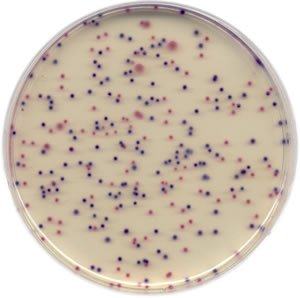
I've been working with a type of E. coli lately that is genetically modified to be non-pathogenic, or unable to cause disease. The project to detect the bacteria was already under way when I joined the team here at Lincoln University, but it was going relatively poorly. A colleague and I took over the project and analyzed all of the procedures and methods, as well as the results that were being gathered. Then, we rewrote the protocols that were being used. To be sure that the protocols that we wrote were the most effective, I have personally been either conducting or overseeing the various aspects of the project. Results have gotten better and the research project seems to be running much more smoothly. At this point, then, we're ready to begin matching the sensor data that we're gathering with actual concentrations of E. coli cells. But determining the concentration of a suspension of cells is not strictly an exact science.
Here's how it works. You take a certain volume of your cell suspension - for the sake of simplicity, let's choose a volume of 1 ml - and disperse the suspension onto some sort of nutrient-containing plate. In our work, we use polystyrene petri dishes with a nutrient-enriched agarose. The cell suspension spreads out over the agar and the bacteria stick to the surface, start feeding on the nutrients in the agar, and begin to divide and proliferate. As the cells reproduce, they do not move away from each other. Instead, they sort of remain stuck together. And as they continue to proliferate, they create a little cell colony. After a certain incubation time, say 24 hours, each viable cell on the plate gives rise to its own discreet colony. Then you go through and count the number of colonies on the plate. Let's say for example that you count 100 colonies on a given plate. Since you started with a volume of 1 ml, that means that your concentration is 100 CFU/ml, where CFU = colony forming unit.
But there's a bit of a problem with my example, because 100 colonies on a plate is not a realistic number. More likely, the number of colonies would be several-fold larger; possibly in the thousands. That's a lot of counting...1 colony, 2 colonies, 3 colonies, 4...
There are ways to make this process a bit easier. Probably the most obvious option would be to divide the plate into even sections. If you divide the plate into, say, 4 equal area segments, then you only need to count the number of cells in one of those segments and simply multiply that number by 4. Either way, though, it's not a lot of fun and I'm not looking forward to it.
Tuesday, February 22, 2011
O Canada!
Not to get too political, but now that the whole health care debate has calmed a bit, I'd like to share a few thoughts on the matter. A quick disclaimer; I am only a casual observer of health care policy, and not in any way an expert on this subject.
Let's start from the semi-beginning (I'm not going to start from the very beginning because that would make this a very long story). President Obama was elected on a particular platform. As I remember it, that platform leaned heavily on job creation and universal health care. And I vividly remember crowds at campaign speeches erupting into applause when universal health care was mentioned. I was one of the applauders, after all.
Fast forward to the debate over the health care overhaul bill. Political figures and other conservative leaning folk began a campaign to essentially confuse the public into turning against the bill. I can envision several reasons for this smear campaign, and I have to say that not all of them are sinister. After all, conservatives are called conservatives for a reason, and they generally want to see government out of people's affairs. So some of the people who were against the bill were against it because of their own beliefs of how the federal government should operate. I have no problems with this. We live in a democracy, after all. However, there was a strong, not-so-sublte, and well funded push from health insurance lobby to kill the health care bill. And this push relied quite a bit on lies. Examples include death panels, dismantling of Medicare and Medicaid, and the U.S. transformation into Canada.
And now everyone is confused and screaming at each other at town hall meetings and making Nazi references. The democrats hoped that the whole ordeal would calm down once the bill was passed into law and everyday people started seeing the benefits of it. It sort of did. Except that there are still pundits, politicians, talk show hosts, and reporters talking about how a majority of Americans, according to the polls, don't want the current health reform system. But what you have to keep in mind is that the question being asked in these polls is, "do you support the current health care overhaul law?" Pollees who answer no to this question not only include those who are against big government and who oppose universal health care (and probably didn't vote for Obama), but also those who wanted all-out universal health care and think that the current bill doesn't go far enough. And it's this latter group that I have a message for.
It's important to remember what, exactly, universal health care really boils down to. You give money, usually in the form of a tax, to the government. The government, in turn, insures your health care. During the health care debate, this is what was referred to as 'single payer.' Everybody has to pay the tax, healthy or sick, to keep the tax rate low. Thus the healthy subsidize the sick.
Now here's how the current system works. Everyone buys health insurance and pays a premium to the insurance company. This can be equated to the tax described above. Then the company insures your health care, just as they've always done. Except that, in the past, not everyone has health insurance. Seemingly healthy people opt out, driving up the amount that the insurance company has to dole out, because the ratio of sick to healthy in their risk pool goes up. To counteract this, the insurance company increases premiums and starts implementing devious policies like 'pre-existing conditions' and 'lifetime limits.' So what 'Obamacare' has done is made those devious policies illegal. And then to keep premiums from skyrocketing, you have to make sure that the risk pool has plenty of healthy who can subsidize the sick. This is what the individual mandate does.
If you're not seeing the parallels here, I'll go ahead and spell it out. The current health care bill is nothing more than privatized universal health care. Everyone pays the tax, but it goes to the insurance company rather than the government. And after all of this rambling, I've finally come to the moral of the story. If, like me, you were really hoping that we would see the birth of universal health care in the United States, just remember this: privatized universal health care is better than no universal health care at all.
Let's start from the semi-beginning (I'm not going to start from the very beginning because that would make this a very long story). President Obama was elected on a particular platform. As I remember it, that platform leaned heavily on job creation and universal health care. And I vividly remember crowds at campaign speeches erupting into applause when universal health care was mentioned. I was one of the applauders, after all.
Fast forward to the debate over the health care overhaul bill. Political figures and other conservative leaning folk began a campaign to essentially confuse the public into turning against the bill. I can envision several reasons for this smear campaign, and I have to say that not all of them are sinister. After all, conservatives are called conservatives for a reason, and they generally want to see government out of people's affairs. So some of the people who were against the bill were against it because of their own beliefs of how the federal government should operate. I have no problems with this. We live in a democracy, after all. However, there was a strong, not-so-sublte, and well funded push from health insurance lobby to kill the health care bill. And this push relied quite a bit on lies. Examples include death panels, dismantling of Medicare and Medicaid, and the U.S. transformation into Canada.
And now everyone is confused and screaming at each other at town hall meetings and making Nazi references. The democrats hoped that the whole ordeal would calm down once the bill was passed into law and everyday people started seeing the benefits of it. It sort of did. Except that there are still pundits, politicians, talk show hosts, and reporters talking about how a majority of Americans, according to the polls, don't want the current health reform system. But what you have to keep in mind is that the question being asked in these polls is, "do you support the current health care overhaul law?" Pollees who answer no to this question not only include those who are against big government and who oppose universal health care (and probably didn't vote for Obama), but also those who wanted all-out universal health care and think that the current bill doesn't go far enough. And it's this latter group that I have a message for.
It's important to remember what, exactly, universal health care really boils down to. You give money, usually in the form of a tax, to the government. The government, in turn, insures your health care. During the health care debate, this is what was referred to as 'single payer.' Everybody has to pay the tax, healthy or sick, to keep the tax rate low. Thus the healthy subsidize the sick.
Now here's how the current system works. Everyone buys health insurance and pays a premium to the insurance company. This can be equated to the tax described above. Then the company insures your health care, just as they've always done. Except that, in the past, not everyone has health insurance. Seemingly healthy people opt out, driving up the amount that the insurance company has to dole out, because the ratio of sick to healthy in their risk pool goes up. To counteract this, the insurance company increases premiums and starts implementing devious policies like 'pre-existing conditions' and 'lifetime limits.' So what 'Obamacare' has done is made those devious policies illegal. And then to keep premiums from skyrocketing, you have to make sure that the risk pool has plenty of healthy who can subsidize the sick. This is what the individual mandate does.
If you're not seeing the parallels here, I'll go ahead and spell it out. The current health care bill is nothing more than privatized universal health care. Everyone pays the tax, but it goes to the insurance company rather than the government. And after all of this rambling, I've finally come to the moral of the story. If, like me, you were really hoping that we would see the birth of universal health care in the United States, just remember this: privatized universal health care is better than no universal health care at all.
Tuesday, February 15, 2011
Would You Like E. coli in Your Coffee, Ma'am?
A few notes on what NOT to do in a research laboratory:
First off, I should give a little background. One of the several lab spaces that a colleague and I have been charged with overseeing and using for our research has traditionally been a sort of community lab. There seem to be a couple of faculty members who utilize the lab for actual research, and students come and go, sometimes appearing to do lab work and sometimes just using a computer that lives on a desk in the corner of the lab. But there is at least one faculty member that seems to view the lab as an oversized break room for their personal use. So based on my observations of this faculty member, I have compiled a list of grievances that will serve as a lesson on improper laboratory behavior.
1) Do not brew coffee on the lab bench. I happen to know that there is research being conducted in that lab on contaminated dirt samples. goat blood, and insecticides. Leaving a coffee pot on the lab bench gives ample opportunity for nasty critters to make their way into the carafe, giving you an extra lump or two of who-knows-what in the coffee that you brew in it.
2) Do not keep a plastic tub stocked with snacks on the lab bench. The reasoning is essentially the same as (1). I have to admit that the plastic tub is an attempt at keeping chemicals, bacteria, and whatever else out of your snack stockpile, but a vain attempt in the end.
3) Do not lock the door to a lab that a number of other researchers use, with a sign on the door reading 'student taking exam, do not enter.' This is not an appropriate use of the laboratory. It's not a classroom. And considering most researchers are very busy and have precious little time to accomplish their daily tasks in the lab, your sign is most certainly going to be ignored.
And that's all I've got so far. I may update this list based on issues I observe in the future, but for now, I think it gives a fairly clear picture of what not to do in a research lab.
First off, I should give a little background. One of the several lab spaces that a colleague and I have been charged with overseeing and using for our research has traditionally been a sort of community lab. There seem to be a couple of faculty members who utilize the lab for actual research, and students come and go, sometimes appearing to do lab work and sometimes just using a computer that lives on a desk in the corner of the lab. But there is at least one faculty member that seems to view the lab as an oversized break room for their personal use. So based on my observations of this faculty member, I have compiled a list of grievances that will serve as a lesson on improper laboratory behavior.
1) Do not brew coffee on the lab bench. I happen to know that there is research being conducted in that lab on contaminated dirt samples. goat blood, and insecticides. Leaving a coffee pot on the lab bench gives ample opportunity for nasty critters to make their way into the carafe, giving you an extra lump or two of who-knows-what in the coffee that you brew in it.
2) Do not keep a plastic tub stocked with snacks on the lab bench. The reasoning is essentially the same as (1). I have to admit that the plastic tub is an attempt at keeping chemicals, bacteria, and whatever else out of your snack stockpile, but a vain attempt in the end.
3) Do not lock the door to a lab that a number of other researchers use, with a sign on the door reading 'student taking exam, do not enter.' This is not an appropriate use of the laboratory. It's not a classroom. And considering most researchers are very busy and have precious little time to accomplish their daily tasks in the lab, your sign is most certainly going to be ignored.
And that's all I've got so far. I may update this list based on issues I observe in the future, but for now, I think it gives a fairly clear picture of what not to do in a research lab.
Tuesday, February 8, 2011
More Endocrine-ness
A quick addition to my endocrine disruptor post:
Despite the fact that research on endocrine disruptors is in its early stages, the EPA's list of chemicals of concern for which chemical action plans have been recently developed includes eight compounds, four of which are known endocrine disruptors.
Despite the fact that research on endocrine disruptors is in its early stages, the EPA's list of chemicals of concern for which chemical action plans have been recently developed includes eight compounds, four of which are known endocrine disruptors.
The full EPA list can be found here.
The four known endocrine disruptors that are included in the EPA report are bisphenol A (BPA), hexabromocyclododecane (HBCD), polybrominated diphenyl ethers (PBDEs), and phthalates. It should be mentioned that the other four chemicals on the list are notably similar in chemical structure to the known endocrine disruptors, meaning that they could potentially have similar harmful effects that have not been studied or documented.
Sunday, February 6, 2011
Disrupting the Endocrine-ness
Many of us are familiar with environmental pollutants such as carbon compounds that have been attributed to climate change and heavy metals like mercury and arsenic. But another interesting class of dangerous pollutants are the hormone-mimicking endocrine disruptors. These compounds likely cause detrimental health effects on wildlife, and also possibly on humans. One major concern is the potential for adverse reproductive and development effects after exposure to endocrine disruptors. Despite the known release of many types of endocrine disruptors into the environment, very little is known about the impact these compounds have, particularly with respect to human health.
And unless you're interested in the specifics of the various endocrine disruptors, you can stop reading here. The remainder of this post is mostly to gather my thoughts and for future reference.
One of the more commonly known endocrine disruptors is Dichloro-diphenyl-trichloroethane (DDT). Studies have indicated that DDT may be responsible for improper female reproductive organ development and decreased fertility in males.

Another thoroughly studied endocrine disruptor is the class of compounds called polychlorinated biphenyls (PCBs). These compounds, manufactured by our very own hometown hero, Monsanto, have been shown to cause several types of cancer. Notably, PCBs increase the risk of skin cancer after contact with the skin. Possible endocrine interference developmental effects include development of childhood obesity and diabetes.

Bisphenol A is a plasticizer that has been linked to a myriad of detrimental health effects. Most disturbingly is the prevalence of these endocrine disruptors in baby bottles.

Very similar in chemical structure to PCBs, Polybrominated diphenyl ethers (PBDEs) are another type of endocrine disruptor that have neurotoxic effects very similar to those of PCBs, as well as other developmental disorders.

Phthalates are another type of endocrine disruptor that is used extensively as a plasticizer. Like bisphenol A, phthalates have been shown to cause many developmental defects and birth defects.

I basically compiled this list from the endocrine disruptors that are featured on the Wikipedia page. Cheap of me, I know, but I had to start somewhere. I should note that there are many other endocrine disruptors not included in this list, and that these compounds are not as thoroughly studied. Though this does not mean that they are any less dangerous. But like I said, the above list is mostly for my own personal reference.
And unless you're interested in the specifics of the various endocrine disruptors, you can stop reading here. The remainder of this post is mostly to gather my thoughts and for future reference.
One of the more commonly known endocrine disruptors is Dichloro-diphenyl-trichloroethane (DDT). Studies have indicated that DDT may be responsible for improper female reproductive organ development and decreased fertility in males.

Another thoroughly studied endocrine disruptor is the class of compounds called polychlorinated biphenyls (PCBs). These compounds, manufactured by our very own hometown hero, Monsanto, have been shown to cause several types of cancer. Notably, PCBs increase the risk of skin cancer after contact with the skin. Possible endocrine interference developmental effects include development of childhood obesity and diabetes.

Bisphenol A is a plasticizer that has been linked to a myriad of detrimental health effects. Most disturbingly is the prevalence of these endocrine disruptors in baby bottles.

Very similar in chemical structure to PCBs, Polybrominated diphenyl ethers (PBDEs) are another type of endocrine disruptor that have neurotoxic effects very similar to those of PCBs, as well as other developmental disorders.

Phthalates are another type of endocrine disruptor that is used extensively as a plasticizer. Like bisphenol A, phthalates have been shown to cause many developmental defects and birth defects.

I basically compiled this list from the endocrine disruptors that are featured on the Wikipedia page. Cheap of me, I know, but I had to start somewhere. I should note that there are many other endocrine disruptors not included in this list, and that these compounds are not as thoroughly studied. Though this does not mean that they are any less dangerous. But like I said, the above list is mostly for my own personal reference.
Tuesday, February 1, 2011
There's Nothing Wrong With People Wanting to Experiment
Let's start with a fluorescent hydrazine derivative, which looks like this:
 This fluorescent dye has had the hydrazine group added so that it will be reactive to ketones and aldehydes. When the fluorescent dye is exposed to an aldehyde or ketone, it undergoes a dehydration reaction, something along the lines of this:
 Now, the reactive dye has specific optical properties. These properties include quantum yield, which is basically the amount of fluorescent emission produced per input light. This means that a certain concentration of dye will produce a predictable fluorescence intensity when excited with a known intensity of illumination light. Other optical properties of interest are the excitation and emission wavelengths. These are the wavelengths of light at which absorption by the dye is maximum and the fluorescent emission of the dye is maximum, respectively.
So here's what I'm wondering. If you react the fluorescent hydrazine with a ketone or aldehyde, do any of these properties change? When the two molecules are combined, does the quantum yield change, making the fluorescent emission more or less bright than it was initially? Will the emission wavelength change, causing a shift in the color of the fluorescence output?
I think both of these possibilities are quite likely, particularly the emission wavelength shift. The reason I believe this is likely is that the makeup of the fluorescent molecule has changed when it combines with the ketone or aldehyde, essentially creating a new molecule. So why wouldn't the optical properties be altered in some way? I've been scouring the internet to answer this question, but have found no definitive answers thus far. So I guess there's only one way to find out. Conduct the experiment myself. And that's what I think I'll do.
 This fluorescent dye has had the hydrazine group added so that it will be reactive to ketones and aldehydes. When the fluorescent dye is exposed to an aldehyde or ketone, it undergoes a dehydration reaction, something along the lines of this:
 Now, the reactive dye has specific optical properties. These properties include quantum yield, which is basically the amount of fluorescent emission produced per input light. This means that a certain concentration of dye will produce a predictable fluorescence intensity when excited with a known intensity of illumination light. Other optical properties of interest are the excitation and emission wavelengths. These are the wavelengths of light at which absorption by the dye is maximum and the fluorescent emission of the dye is maximum, respectively.
So here's what I'm wondering. If you react the fluorescent hydrazine with a ketone or aldehyde, do any of these properties change? When the two molecules are combined, does the quantum yield change, making the fluorescent emission more or less bright than it was initially? Will the emission wavelength change, causing a shift in the color of the fluorescence output?
I think both of these possibilities are quite likely, particularly the emission wavelength shift. The reason I believe this is likely is that the makeup of the fluorescent molecule has changed when it combines with the ketone or aldehyde, essentially creating a new molecule. So why wouldn't the optical properties be altered in some way? I've been scouring the internet to answer this question, but have found no definitive answers thus far. So I guess there's only one way to find out. Conduct the experiment myself. And that's what I think I'll do.
Subscribe to:
Posts (Atom)

